
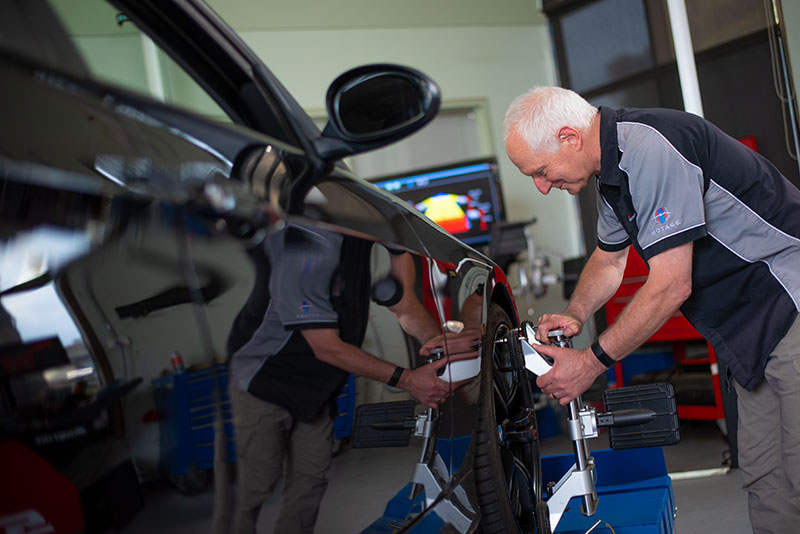
In today’s automotive landscape, the familiar “check engine” light is no longer a simple signal it’s the tip of a technological iceberg. Modern vehicles are essentially rolling computers, governed by complex networks of Electronic Control Units (ECUs) that manage everything from engine timing to infotainment. When a problem arises, the old-school methods of diagnosis, while still valuable for mechanical checks, are often insufficient. This is where advanced diagnostic scanning and precise fault finding transition from luxury services to essential maintenance, offering profound benefits for vehicle owners.
1. Pinpoint Accuracy, Not Guesswork
The primary advantage of advanced scanning is the elimination of costly guesswork. A basic code reader might retrieve a generic code like P0300 (random/multiple cylinder misfire). However, an advanced diagnostic scan tool, often with OEM-level software, delves deeper. It can pinpoint which cylinder is misfiring, analyze live data from that cylinder’s injector and coil, review historical freeze-frame data from when the fault occurred, and even perform bi-directional tests. This transforms diagnostic and fault finding from a process of trial-and-error into a surgical procedure, saving significant time and preventing unnecessary part replacement.
2. Uncovering Hidden and Intermittent Issues
Many modern car problems are intermittent a hesitation only when the engine is cold, a glitch that disappears by the time you reach the shop. Advanced scanners are crucial for these ghosts in the machine. Technicians can use them to record live data streams over a test drive, capturing parameters from dozens of sensors simultaneously. By replaying this data when the symptom occurs, they can correlate the fault with specific sensor readings, revealing problems that would otherwise remain hidden until they develop into a major, and more expensive, failure.
3. Comprehensive System Health Checks
Today’s vehicles are integrated ecosystems. A fault in the transmission control module can affect engine performance, and a problem with a wheel speed sensor can destabilize the entire stability control and ABS network. Advanced scanning provides a holistic view. It allows technicians to scan all vehicle modules not just the engine ECU, but also those for the transmission, airbags, brakes, climate control, and more. This system-wide health check is vital for identifying underlying issues that could affect safety, performance, and efficiency, ensuring no critical fault goes unnoticed.
4. Saving Time and Money in the Long Run
While an advanced diagnostic session has an upfront cost, it is one of the most cost-effective services you can invest in. Accurate fault finding prevents the “parts cannon” approach throwing expensive components like catalytic converters or throttle bodies at a problem hoping for a fix. This precision directly saves money on unnecessary parts and labor. Furthermore, by identifying minor issues early like a slowly failing oxygen sensor or a minor vacuum leak it prevents them from causing cascading damage to more expensive components, such as the engine or catalytic converter.
5. Supporting Proper Maintenance and Resale Value
Advanced diagnostics are not just for repairs. They are powerful tools for proactive maintenance. Scanning systems before and after a major service can confirm that all parameters are within specification and that no latent faults are present. For used car buyers or sellers, a pre-purchase diagnostic scan provides an objective, computer-generated health report far more revealing than a standard visual inspection. This transparency builds trust and can substantiate a higher resale value by documenting the vehicle’s electronic health.
6. Enabling Software Updates and Calibrations
Modern vehicles frequently require software updates or recalibrations after certain repairs or as part of manufacturer technical service bulletins. A basic tool cannot perform these functions. Advanced scan tools and software are often needed to reprogram ECUs, reset adaptation values after replacing a throttle body, or calibrate a new radar sensor for advanced driver-assistance systems (ADAS) following a windshield replacement. This ensures your car operates with the latest, safest, and most efficient software.
The Essential Tool for Modern Car Care
Choosing a repair facility equipped with advanced diagnostic capabilities and certified technicians who excel indiagnostic and fault finding is no longer optional it’s a necessity for maintaining a modern vehicle. It represents a shift from reactive repair to intelligent, data-driven vehicle management. By leveraging this technology, you ensure your car receives the informed care it requires, safeguarding your investment, ensuring your safety, and unlocking the full performance and reliability engineered into your vehicle. When the check engine light glows, remember: the real answer lies not under the hood, but in the data.