
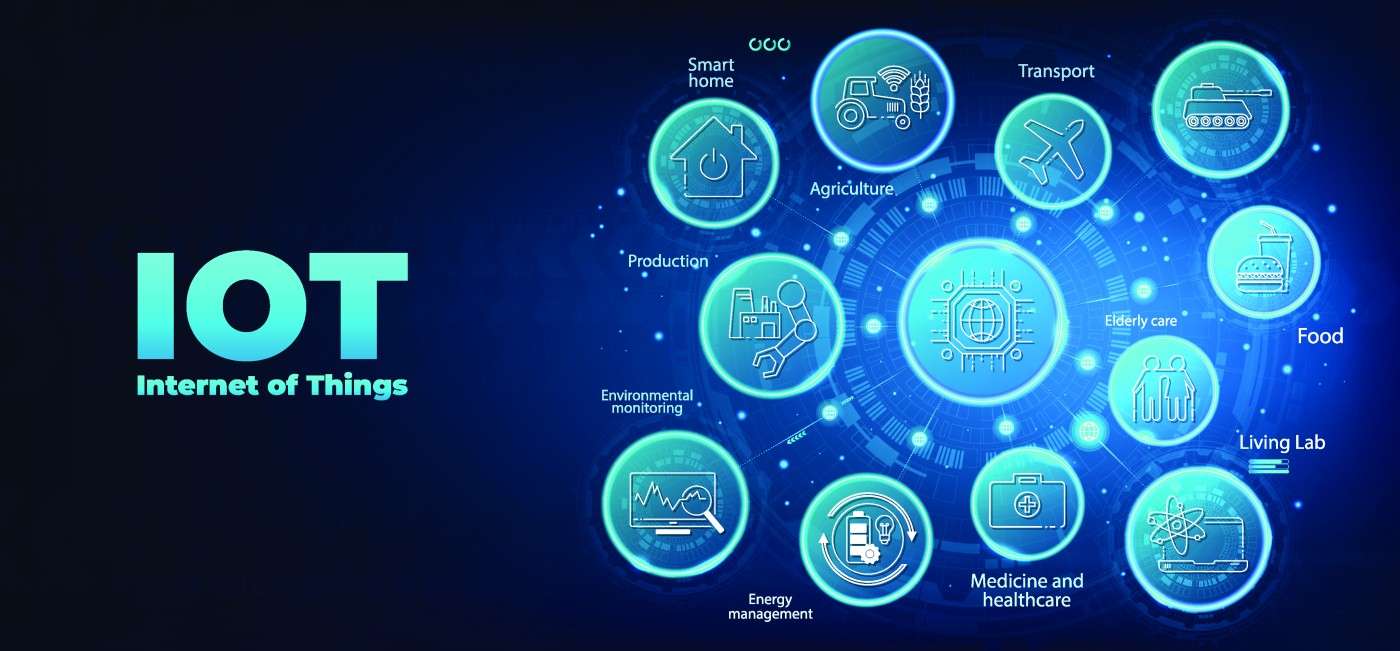
Building IoT solutions that react instantly, communicate reliably, and scale effortlessly requires one foundation element that often goes unnoticed: the right real-time communication protocol. As connected ecosystems expand across industries like healthcare, logistics, energy, and smart infrastructure, the pressure on device-to-cloud communication increases. Systems must now deliver millisecond-level responses, support intermittent connectivity, and ensure data integrity in unpredictable network conditions.
Choosing the right protocol is not just a technical preference. It directly shapes system resilience, performance, power consumption, and long-term operational efficiency. This blog explores the most effective real-time communication protocols used in modern IoT projects and why they continue to dominate high-performance deployments.
Understanding Real-Time Communication Needs in IoT
IoT environments are inherently diverse. Devices differ in processing power, memory, battery life, and network stability. Real-time communication refers to the ability of these devices to transmit and receive data with minimal delays, ensuring that actions, alerts, and insights are generated at the moment they are needed.
Real-time requirements commonly arise in:
-
Remote patient monitoring where any delay in vital signs can risk patient safety
-
Industrial automation where sensors trigger instant control responses
-
Smart mobility systems that depend on fast telemetry
-
Predictive maintenance where continuous data flow is critical
This complexity makes it essential to choose a protocol that balances performance, reliability, and energy efficiency — a decision that ultimately determines the success of IoT architecture.
Key Factors When Selecting Real-Time IoT Protocols
Before exploring the specific protocols, it is important to understand the criteria that guide protocol selection:
1. Latency Requirements
Critical systems often need sub-second communication. Protocols must offer deterministic or near-deterministic performance.
2. Network Conditions
Devices may operate on cellular networks, Wi-Fi, or low-power wide area networks where packet loss is likely.
3. Energy Constraints
Battery-powered devices require lightweight communication overhead to conserve energy.
4. Security Standards
Encrypted channels, authentication mechanisms, and access controls are non-negotiable.
5. Scalability and Interoperability
Protocols should connect thousands — sometimes millions — of devices without performance degradation.
With these criteria in mind, let’s examine the leading real-time protocols shaping the IoT landscape.
MQTT: The Lightweight Champion for Real-Time IoT
MQTT (Message Queuing Telemetry Transport) is one of the most widely adopted protocols for real-time IoT applications. Designed for low-bandwidth and resource-constrained environments, MQTT offers a publish–subscribe model that makes communication efficient and scalable.
Why MQTT Works for Real-Time IoT
-
Extremely lightweight with minimal packet overhead
-
Excels in unreliable networks
-
Powered by persistent sessions for continuous communication
-
Supports Quality of Service (QoS) levels for delivery assurance
-
Seamless integration with cloud platforms such as AWS, Azure, and GCP
MQTT is ideal for telemetry-heavy applications like environmental sensors, asset tracking, fleet monitoring, and home automation. It continues to serve as a core protocol in many internet of things development services where reliability and low power consumption are essential.
CoAP: A Resource-Efficient Protocol for Constrained Devices
CoAP (Constrained Application Protocol) is designed specifically for devices with very limited power and memory. Inspired by HTTP but far more lightweight, CoAP enables quick request-response cycles suited for real-time operations.
Where CoAP Delivers the Most Value
-
Smart building automation
-
Metering systems
-
Environmental monitoring networks
-
Battery-operated, low-memory devices
Its ability to work over UDP makes it faster than TCP-based protocols in many real-time scenarios. CoAP also offers built-in resource discovery and multicast support, which is invaluable for large sensor networks.
AMQP: A Reliable and Secure Real-Time Messaging Standard
AMQP (Advanced Message Queuing Protocol) is known for its robust reliability features. While slightly heavier than MQTT, it provides strong message delivery guarantees, making it the preferred choice for enterprise-grade IoT deployments.
Why AMQP Stands Out
-
Secure, transactional message handling
-
Excellent for mission-critical industrial systems
-
Designed for multi-node distributed systems
-
Supports large-scale routing and complex topologies
AMQP excels in sectors that require guaranteed message delivery, such as manufacturing systems, financial monitoring, and enterprise process automation.
WebSockets: Real-Time, Full-Duplex Communication
WebSockets offer a persistent, two-way communication channel between clients and servers. They are especially useful when IoT solutions need real-time updates delivered to browser-based dashboards or mobile interfaces.
Typical Use Cases
-
Real-time fleet dashboards
-
Live device monitoring interfaces
-
Remote equipment control
-
Smart city dashboards
Because WebSockets maintain an open connection, they provide very low-latency communication, enabling near-instant exchange of data.
LoRaWAN: Long-Range Communication for Low-Power Devices
LoRaWAN is not only a communication protocol but also a low-power wide area network (LPWAN) standard used for real-time communication across long distances. It is perfect for rural, industrial, and remote environments where traditional connectivity options are limited.
Best-Fit Scenarios
-
Agriculture and smart farming
-
Oil and gas pipeline monitoring
-
Water management
-
Smart street lighting
-
Remote asset tracking
LoRaWAN’s ability to transmit small data packets over many kilometers with years of battery life makes it a leading option for large-scale IoT deployments.
OPC UA: A Real-Time Standard for Industrial Automation
OPC UA (Open Platform Communications Unified Architecture) is a powerful protocol used heavily in industrial IoT systems, manufacturing, and SCADA environments.
Why It Matters in Industrial IoT
-
High security and standardization
-
Platform-independent
-
Ideal for real-time machine communication
-
Supports predictive maintenance and robotics
OPC UA ensures seamless machine-to-machine communication, enabling factories to transition into smart, connected ecosystems.
How to Choose the Right Real-Time Protocol
The selection process depends on:
1. Device Capability
Low-memory sensors benefit from MQTT and CoAP. High-power industrial devices may leverage AMQP or OPC UA.
2. Application Priority
-
Low latency → WebSockets, MQTT
-
Guaranteed delivery → AMQP
-
Long-range communication → LoRaWAN
3. Security Requirements
Industrial or medical applications must prioritize encrypted, authenticated communication with layered security models.
4. Scalability Goals
Protocols should meet both current needs and future expansion plans without extensive re-engineering.
Conclusion
Real-time communication is the backbone of every high-performing IoT ecosystem. Selecting the right protocol can significantly enhance system responsiveness, security, and long-term sustainability. Whether the need is ultra-low latency, high reliability, long-range communication, or minimal power consumption, modern IoT protocols offer specialized strengths tailored for diverse environments.
For engineering leaders and product teams, the priority is to align protocol capabilities with long-term operational needs, ensuring systems remain resilient, scalable, and future-ready.
FAQs
1. What makes MQTT ideal for real-time IoT communication?
MQTT’s lightweight structure, publish–subscribe architecture, and low bandwidth consumption make it perfect for devices operating in unstable networks or powered by small batteries.
2. How does CoAP differ from HTTP in IoT applications?
CoAP is designed for constrained devices. It is faster, lighter, and suitable for machine-to-machine communication, while HTTP is more resource-intensive and built for web applications.
3. Is AMQP too heavy for IoT devices?
AMQP is heavier than MQTT but ideal for enterprise systems that require high reliability, transactional messaging, and complex routing across distributed infrastructure.
4. Where are WebSockets most useful in IoT?
WebSockets shine in real-time dashboards, remote control interfaces, and any application requiring persistent two-way communication between servers and clients.
5. Why choose LoRaWAN for industrial IoT?
LoRaWAN supports long-range, low-power communication, making it excellent for remote monitoring, smart agriculture, mining operations, and infrastructure spread across large geographical regions.