
In an industrial landscape, precision and reliability are paramount. Whether in electronics manufacturing, aerospace components, battery inspection, or quality control in metal castings, imaging technology must go beyond “good enough.” Even the smallest flaws, hidden voids, or micro-scale defects can compromise safety, reliability, and performance.
This makes the microfocus x ray source an indispensable tool for advanced inspections, providing high-resolution imaging that reveals internal structures without damaging the object. Non-destructive testing (NDT) using this technology ensures the integrity of critical components and enhances overall manufacturing quality.
Understanding the Microfocus X Ray Source
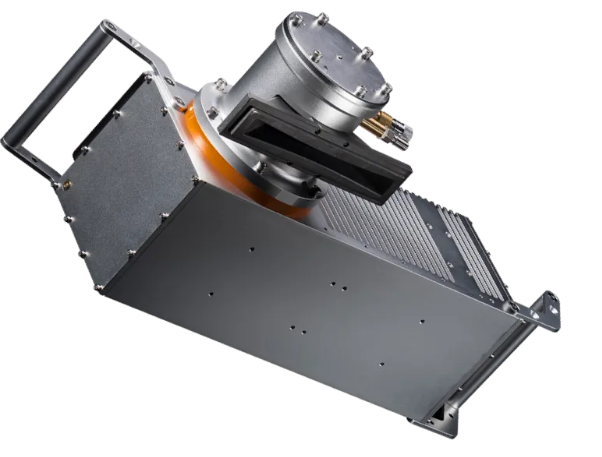
A microfocus X ray source is designed to produce a very small focal spot, often just a few micrometers in diameter. This tiny focal point reduces geometric unsharpness, which results in sharper, more detailed images. The smaller the focal spot, the more precise the captured image, making it ideal for inspecting intricate components or densely packed assemblies. The high resolution offered by a microfocus X‑ray source is invaluable for detecting defects that traditional radiography might miss.
This technology also enables short focal-object distances (FOD), allowing for magnification and high-detail inspection workflows. Whether inspecting miniature electronic components or complex industrial parts, a microfocus X ray source provides the precision necessary for modern quality control.
The Importance of High Resolution
Industries such as electronics, semiconductors, medical devices, and battery manufacturing operate at tolerances that leave very little room for error. A small crack in a solder joint, a microscopic void in a battery cell, or an internal defect in a cast metal part can lead to major failures if undetected. By employing a microfocus X‑ray source, inspectors can detect flaws down to microns, enabling:
- Accurate defect detection: Pinpointing micro-cracks, voids, delaminations, or inclusions that are invisible to standard inspection techniques.
- Non-destructive testing: Examining internal structures without disassembling or damaging the product.
- Quality assurance and control: Ensuring each unit meets strict standards and reducing the risk of recalls or failures.
- Process validation: Confirming the integrity of complex manufacturing processes, including soldering, casting, or battery assembly.
When paired with advanced detectors and imaging software, a microfocus X ray source supports both 2D radiography and 3D computed tomography (CT), allowing volumetric inspection and comprehensive analysis of internal structures.
The Role of High Voltage Power Supply Manufacturers
Producing a high-precision microfocus X‑ray beam is not just about creating a small focal spot. It requires a stable, high-voltage power supply to drive the tube with consistent output and precise tube current control. High voltage power supply manufacturers play a critical role in this process, ensuring that X‑ray tubes maintain stability, performance, and longevity.
A well-engineered power supply allows rapid voltage ramp-up, stable operation under variable loads, smooth control for different materials, and efficient heat management. These factors are essential for producing high-quality, reliable imaging over extended periods, especially in industrial settings where uptime is crucial.
Applications Across Industries
Microfocus X ray sources are versatile and find applications across a wide range of industries:
- Electronics and semiconductor inspection: Detecting defects in solder joints, BGA connections, and PCB internal structures. Precision imaging allows manufacturers to maintain high-quality standards for complex circuits.
- Battery inspection: Analyzing internal layers, welds, and electrode structures for voids, delamination, or defects. This is especially critical for lithium-ion and other advanced battery technologies.
- Metal castings and industrial NDT: Identifying internal inclusions, porosity, weld defects, and density anomalies in components used in automotive, aerospace, and heavy machinery.
- Research and metrology: Examining internal geometries and defects in materials, including additive manufacturing components, composites, and high-precision parts.
- Medical devices and small component inspection: Ensuring internal structural integrity of implants, dental devices, surgical tools, and other critical products.
By enabling inspections that were previously impossible or impractical, microfocus X ray sources help organizations achieve unparalleled product reliability.
Advantages Over Conventional X‑Ray Systems
Compared to traditional X-ray systems with larger focal spots, microfocus sources offer several key advantages:
- Higher spatial resolution: Fine defects become detectable, enhancing quality control.
- Better magnification and sharpness: Small focal spots and short FODs provide clearer images of complex structures.
- Lower geometric unsharpness: Enables precise measurement and accurate volumetric analysis.
- Material versatility: Adjustable voltage and current settings allow inspection of both soft electronics and dense metals.
- Advanced integration: Supports 3D CT imaging and digital radiography for detailed internal inspection.
These benefits make microfocus X‑ray sources the preferred choice for industries that demand the highest levels of inspection accuracy.
Selecting the Right System
Choosing the appropriate microfocus X‑ray system involves several considerations:
- Focal spot size: Smaller spots yield higher resolution for intricate components.
- Tube voltage and power capacity: Must match material density to ensure adequate penetration without noise.
- Power supply stability: Reliable high-voltage control ensures consistent performance and extends tube life.
- System integration: Detectors, software, and mechanics must be compatible with tube capabilities.
- Maintenance and operator skill: Trained personnel are necessary for operation, image interpretation, and routine maintenance.
- Safety compliance: Adherence to radiation safety regulations and shielding requirements is essential.
The Business Case for Microfocus Inspection
The cost of undetected defects can far exceed the investment in precision inspection. By incorporating microfocus X‑ray sources into production workflows, companies can:
- Detect defects early, preventing downstream failures.
- Increase first-pass yield and reduce scrap rates.
- Provide documented proof of quality for clients or regulators.
- Improve product reliability, safety, and brand reputation.
For high-value, safety-critical products, microfocus X ray inspection is not optional it is essential.
Challenges and Considerations
While offering unmatched precision, microfocus inspection presents certain challenges:
- Higher cost and system complexity: Requires investment in tubes, detectors, software, and shielding.
- Throughput limitations: Achieving high resolution may reduce inspection speed.
- Operator skill requirements: Trained personnel are needed to manage imaging and interpret results.
- System integration: Detectors, mechanics, and software must be aligned with tube capabilities.
- Safety and regulatory compliance: High-voltage X-ray systems require strict adherence to safety protocols.
Despite these considerations, the benefits in quality assurance and reliability far outweigh the challenges for most industries.
Conclusion
Incorporating a microfocus X ray source into inspection workflows ensures unmatched precision and reliability. By detecting micro-defects, enabling non-destructive testing, and supporting complex industrial and medical applications, these systems enhance quality control, reduce failure risks, and improve product integrity, making them indispensable for modern manufacturing and research environments.
VJ X‑Ray provides microfocus X‑ray systems engineered for precision, reliability, and efficiency. Featuring high-quality X-ray tubes and advanced high-voltage solutions, these systems deliver detailed internal imaging across electronics, industrial components, and medical devices. With robust support and cutting-edge technology, VJ X‑Ray ensures inspections meet the highest standards of accuracy, safety, and performance.