
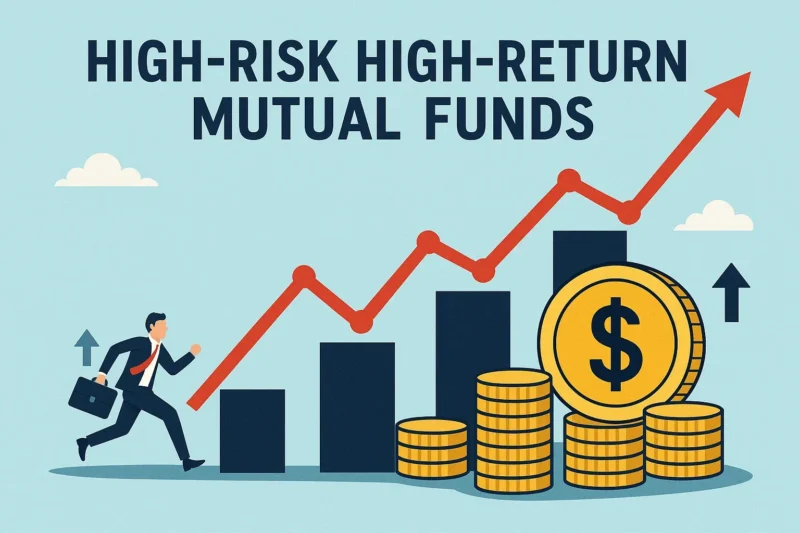
In today’s digital-first investing world, information is everywhere. Daily news alerts, social media tips, YouTube predictions, and WhatsApp forwards constantly shout about the next big fund. For investors, the real challenge isn’t finding high return mutual funds—it’s identifying the right ones without getting distracted by short-term noise.
Smart investors know that long-term wealth is built with discipline, data, and patience, not hype. Let’s break down how experienced investors evaluate funds with high return potential while avoiding costly emotional decisions.
Understanding the Difference Between Returns and Noise
Market noise refers to short-term information that feels important but has little impact on long-term performance. Examples include:
-
A fund topping the charts for 3–6 months
-
Temporary market rallies or crashes
-
Influencer-driven “hot picks”
-
Panic-driven buying or selling
Seasoned investors don’t ignore news—but they don’t react blindly either. They focus on fundamentals that truly matter over a market cycle.
Focus on Long-Term Performance, Not Recent Rankings
One of the most common mistakes retail investors make is chasing last year’s best performer. A fund that delivered 40% returns in one year may not repeat that performance.
Experienced investors evaluate:
-
5–10 year CAGR (Compounded Annual Growth Rate)
-
Performance across bull and bear markets
-
Consistency, not spikes
Many high return mutual funds earn that reputation by staying resilient during downturns, not just booming during rallies.
Analyze Risk-Adjusted Returns
High returns are meaningless without understanding the risk taken to achieve them. This is where professional investors go deeper.
They look at:
-
Standard deviation (volatility)
-
Sharpe ratio (return per unit of risk)
-
Downside capture ratio
A fund delivering slightly lower returns but with controlled risk is often a better long-term choice than an aggressive, unstable option.
Evaluate the Fund Manager and Investment Strategy
Behind every successful fund is a repeatable process. Smart investors don’t just invest in numbers—they invest in people and philosophy.
Key questions they ask:
-
How long has the fund manager handled this scheme?
-
Is the strategy growth, value, or blended?
-
Does the fund stick to its stated mandate?
Many top high return mutual funds outperform because they follow a disciplined strategy, not because they chase trends.
Check Portfolio Quality and Holdings Concentration
Looking inside the fund portfolio reveals a lot about future potential.
Experienced investors examine:
-
Sector allocation (overexposure increases risk)
-
Stock concentration (top 5–10 holdings weight)
-
Quality of underlying businesses
Funds overloaded with speculative or overhyped stocks may deliver quick gains—but they’re also more vulnerable during corrections.
Understand Expense Ratio and Turnover
Returns don’t come free. High costs silently eat into long-term wealth.
Investors prefer funds with:
-
Reasonable expense ratios
-
Lower portfolio turnover (less frequent buying/selling)
Even a 1% difference in cost can significantly impact returns over 10–15 years, especially when investing in high return mutual funds for long-term goals.
Align Fund Selection With Personal Goals
Not every high-return fund is suitable for every investor.
Professionals always match funds with:
-
Investment horizon (short, medium, long term)
-
Risk tolerance
-
Financial goals (retirement, education, wealth creation)
A fund perfect for a 25-year-old may be completely wrong for someone nearing retirement—even if both promise high returns.
Ignore Predictions, Trust the Process
Market predictions are seductive but unreliable. Smart investors know that nobody can consistently time the market.
Instead, they:
-
Use SIPs to average costs
-
Rebalance portfolios periodically
-
Stay invested during volatility
This disciplined approach often outperforms those who constantly jump between high return mutual funds based on headlines.
Final Thoughts
Evaluating funds with strong return potential is less about chasing what’s trending and more about understanding what’s sustainable. Investors who win in the long run stay focused on data, risk, and consistency—not noise.
If you want to benefit from high return mutual funds, think like a long-term investor, not a short-term speculator. The real edge isn’t speed—it’s patience and clarity.