
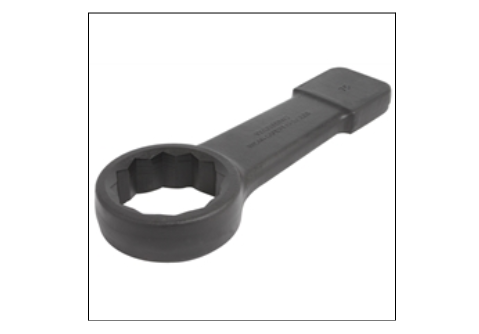
Heavy industrial tasks require tools capable of handling intense force without compromising stability or safety. The rugged design of a slugging wrench makes it a preferred choice for technicians working with oversized bolts, stubborn fasteners, and machinery exposed to high vibration or heavy loads. Its reinforced build and impact-ready configuration allow it to absorb repeated strikes while transferring controlled torque directly to the fastener, making it indispensable for maintenance operations across sectors like oil and gas, energy, manufacturing, and structural works.
Advancing Torque Control Through Impact-Ready Design
The core advantage of this tool lies in its ability to manage large amounts of torque through controlled, repetitive blows. Its geometry, grip structure, and alloy composition come together to create a reliable force-transfer system, allowing technicians to loosen seized components or tighten critical joints without relying on powered tools.
- Stable Force Transmission on Stubborn Fasteners
The wrench is designed to handle impact strikes without distortion, enabling clean torque transfer even when dealing with corroded or heavily tightened fasteners. This stability prevents slippage and protects the technician from unexpected tool movement during force application. - Durable Body Crafted for High Impact Cycles
Built from heavy-duty alloys, the tool withstands repeated hammer strikes over long maintenance cycles. Its structure resists stress fractures and surface deformation, ensuring sustained performance even when used on large assemblies or equipment exposed to harsh conditions. - Enhanced Grip for Confident Handling
The handle is shaped to offer substantial surface area and traction, allowing workers to maintain firm control during every strike. A confident grip contributes to better alignment, preventing energy loss and minimizing the risk of accidental tool rebound.
Supporting Consistency in Industrial Workflows
A slugging tool plays a vital role in environments where precision and force must work together. Whether opening large flanges, adjusting structural bolts, or maintaining pressure pipelines, technicians rely on the tool for predictable, repetitive performance. The pairing of a hammer strike with a specialized wrench design streamlines the process while maintaining safety.
- Ideal for Bolts Exposed to Harsh Environments
Fasteners on heavy machinery often face rust, thermal cycling, or material expansion. Using a hammering wrench helps break these bonds effectively, allowing maintenance teams to complete tasks without resorting to risky improvised methods or excessive heating techniques. - Compatibility With Large-Scale Assemblies
Many industrial systems include bolts with sizes far beyond standard socket capacity. The tool accommodates these dimensions comfortably, making it suitable for flanges, heavy plates, structural beams, and equipment housings. - Reduced Dependency on Powered Tools
In remote or hazardous environments where power tools are impractical or unsafe, the wrench offers a dependable manual alternative. It ensures that technicians can still apply high torque without compromising control or safety standards.
Conclusion
The effectiveness of a slugging tool in heavy-duty maintenance stems from its dependable structure and confidence-inspiring force delivery. As industries continue to evolve toward more robust and high-capacity machinery, such tools play a critical role in maintaining operational integrity and safety. POWERMASTER AMERICA LLC strengthens this reliability through its commitment to durable materials, precise manufacturing, and tool designs that support the demanding routines of industrial professionals.