
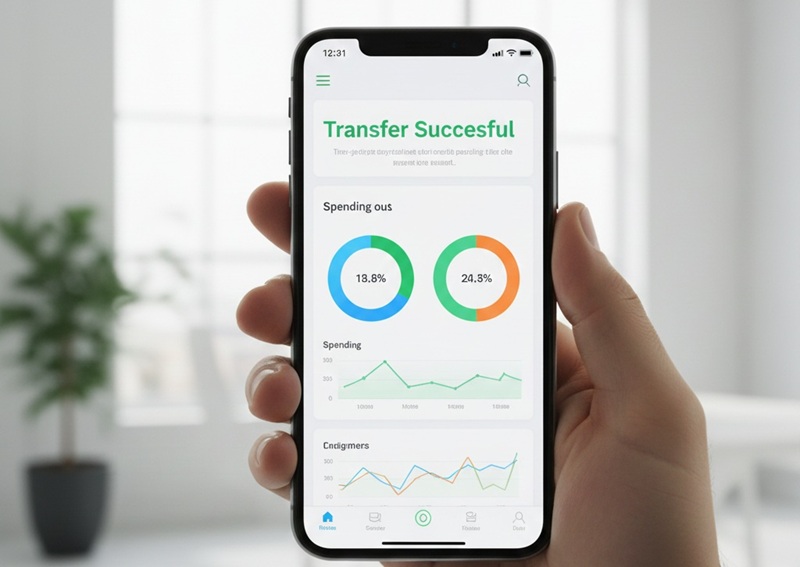
Let’s be real: when was the last time you actually stepped inside a physical bank? If you’re like most Americans, it’s probably been a while.
We live in an age where “banking” is a verb that happens on our phones while we wait for coffee. For financial institutions, this shift isn’t just a trend—it’s a survival mandate. If your digital banking software feels like a relic from 2012, your customers are already looking for the exit.
But choosing the right platform isn’t just about picking the prettiest UI. It’s about building a tech stack that’s secure enough to stop a nation-state hacker and flexible enough to integrate with every new FinTech app that pops up tomorrow.
Let’s cut through the jargon and look at what actually matters when you’re shopping for the engine that will power your institution’s future.
Key Takeaways: What You Need to Know Now
- Customer-Centricity is King: Personalization isn’t optional; it’s the standard.
- API-First Architecture: Your software must play well with others (think Plaid, Stripe, etc.).
- Security is a Moving Target: Look for AI-driven fraud detection and zero-trust models.
- Scalability: Don’t buy for the 10,000 users you have now; buy for the million you want in three years.
Why “Good Enough” is Killing Your Retention
Most legacy systems were built for back-office efficiency, not customer delight. They’re “stable,” sure, but they’re also rigid.
When a customer wants to open a high-yield savings account in three clicks and your software requires a branch visit or a 5-page digital PDF, you’ve already lost. Modern digital banking software needs to be invisible. It should just work, anticipating needs rather than reacting to them.
The Anatomy of High-Performance Banking Tech
What separates a mediocre platform from a market leader? It usually boils down to three pillars:
1. The Core Banking Integration
Your digital front-end is only as good as the core it’s plugged into. Whether you’re running on a legacy mainframe or a cloud-native core, the integration needs to be real-time. Batch processing is a dinosaur; your customers want to see their transactions the second they swipe.
2. Omni-Channel Consistency
Ever started an application on your laptop only to find you have to start all over again on the mobile app? That’s a friction point that kills conversions. True digital banking software provides a “hand-off” experience that’s seamless across desktop, mobile, and even wearables.
3. Hyper-Personalization
If I don’t have a mortgage, don’t show me mortgage ads. Using AI to analyze spending patterns allows you to offer the right product at the exact moment the customer needs it. That’s how you turn a utility into a partner.
Comparing the Giants: SaaS vs. Custom Build
Should you buy a license or build from scratch? It’s the age-old question.
| Feature | SaaS / Off-the-Shelf | Custom-Built Software |
|---|---|---|
| Speed to Market | Fast (3-6 months) | Slow (12-24 months) |
| Initial Cost | Lower (Subscription-based) | Extremely High (R&D + Dev) |
| Customization | Limited to platform modularity | Unlimited |
| Maintenance | Handled by vendor | In-house responsibility |
| Ideal For | Mid-market banks & Credit Unions | Tier-1 Global Banks |
For most institutions, the “Hybrid” approach is winning. You buy a robust SaaS platform that offers an extensive API library, allowing you to build custom “wrappers” or features on top of a stable foundation.
The Non-Negotiable Features of 2026
If you’re vetting vendors, keep this checklist on your desk. If they can’t check these boxes, keep walking.
Biometric Everything
FaceID and TouchID are the baselines. We’re moving toward behavioral biometrics—analyzing how a user holds their phone or types to detect if an account has been hijacked.
Instant Payments (FedNow & RTP)
In the US, the era of “waiting 3 business days” for an ACH transfer is over. Your software must support real-time payment rails like FedNow. If you can’t move money instantly, you’re not a digital bank; you’re a digital mailbox.
Self-Service Wealth Management
Customers want to do more than save; they want to invest. Integrating micro-investing, crypto-exposure, or automated “round-up” savings directly into the banking app is a massive engagement driver.
ESG and Carbon Tracking
Believe it or not, younger demographics (Gen Z and Millennials) want to see the environmental impact of their spending. Platforms like Meniga or Doconomy are becoming standard plugins for modern banking suites.
The Hidden Cost of Legacy Technical Debt
We’ve all seen it. A bank tries to “bolt-on” a mobile app to a 30-year-old COBOL system. It works… until it doesn’t.
Technical debt is like high-interest credit card debt for your business. You might be saving money this quarter by not upgrading, but the “interest” you pay in lost customers, security vulnerabilities, and slow feature rollouts will eventually bankrupt your innovation strategy.
Upgrading your digital banking software isn’t an expense; it’s a capital investment in your brand’s relevance.
Frequently Asked Questions
What is the difference between online banking and digital banking? Online banking is essentially a web-based version of traditional banking (checking balances, paying bills). Digital banking is a total digital transformation that includes the back-end, front-end, and the delivery of all banking products and services through digital channels, often excluding the need for physical branches entirely.
How much does digital banking software cost? It varies wildly. Small credit unions might pay $50k-$100k in annual licensing for a white-label solution, while enterprise-grade implementations for large banks can run into the millions when factoring in implementation and custom integrations.
Is digital banking software secure? Yes, often more so than traditional banking. Modern platforms use multi-factor authentication (MFA), end-to-end encryption, and AI-driven fraud monitoring that can spot suspicious activity faster than any human ever could.
Can I integrate third-party apps like Venmo or Mint? If the software uses Open Banking standards and robust APIs, yes. This is a critical feature to look for, as customers want their financial data to be portable and accessible across their favorite apps.
The Bottom Line: Start with the User, Not the Tech
At the end of the day, your customers don’t care about your tech stack. They care about their lives. They care about buying a home, saving for college, or sending money to a friend for dinner.
The best digital banking software is the one that gets out of the way. It’s the platform that makes complex financial tasks feel like a breeze.
Ready to modernize? Don’t just look for a vendor; look for a partner who understands where the US financial landscape is headed. The branch might be shrinking, but the opportunity to connect with your customers has never been larger.