
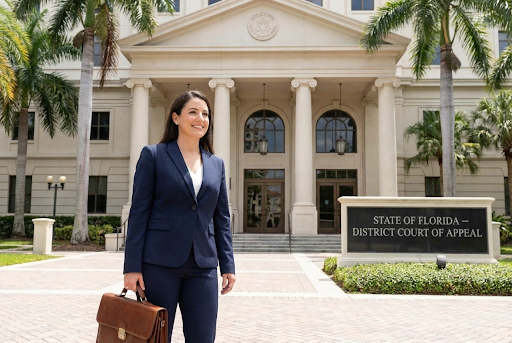
Florida defendants seeking conviction remedies discover essential representation through an experienced appellate attorney florida combining Florida appellate expertise, appellate court specialization, and sophisticated legal advocacy. Unlike general practitioners who lack appellate focus, qualified Appeal lawyers in Florida deliver comprehensive knowledge of Florida appellate law, Florida court experience, and strategic representation that maximize the probability of appellate success. This comprehensive guide explores Florida appellate representation, appellate procedures, legal grounds, and selecting appropriate Florida appellate counsel, ensuring effective advocacy.
Florida Appellate System
Court Structure
Appellate hierarchy:
- Trial courts: Circuit and county courts
- District courts of appeal: Five regional appellate courts
- Florida Supreme Court: Final state appellate authority
- Appellate jurisdiction: Reviewing trial decisions
- Florida precedent: Creating binding authority
- Federal courts: Federal appellate alternatives
Florida provides multiple appellate levels.
Appellate Districts
Regional divisions:
- First District: Northern Florida jurisdiction
- Second District: Tampa Bay area jurisdiction
- Third District: Miami-Dade area jurisdiction
- Fourth District: South Florida jurisdiction
- Fifth District: Central Florida jurisdiction
- District assignment: Trial location determines jurisdiction
District assignment depends on trial location.
Florida Appeal Procedures
Notice of Appeal
Filing requirements:
- Timing: 30-day post-judgment deadline
- Documentation: Complete notice of appeal
- Trial court jurisdiction: Maintaining jurisdiction
- Appellate court: Establishing appellate jurisdiction
- Party notification: Proper service requirement
- Appellate docket: Beginning appellate process
Timely filing initiates Florida appeal.
Appellate Briefing
Florida requirements:
- Appellant brief: Appellant arguments
- Appellee brief: Other party response
- Reply brief: Appellant final response
- Florida rules: Florida Rules of Appellate Procedure
- Page limits: Strict limitations
- Professional formatting: Court requirements
Quality briefs determine outcomes.
Oral Arguments
Florida argument process:
- Court calendar: Appellate court scheduling
- Time allocation: Limited argument time
- Judge panel: Three judges standard
- Question response: Addressing judicial inquiries
- Strategic emphasis: Highlighting strongest points
- Professional delivery: Persuasive presentation
Oral arguments significantly impact decisions.
Florida Appeal Grounds
Trial Court Errors
Appealable mistakes:
- Legal errors: Trial court legal mistakes
- Procedural violations: Constitutional/procedural breaches
- Evidentiary errors: Improper evidence handling
- Jury instruction errors: Incorrect instructions
- Sentencing errors: Improper sentencing procedures
- Constitutional violations: Rights violations
Trial errors support appellate challenges.
Ineffective Assistance
Attorney performance claims:
- Inadequate investigation: Insufficient preparation
- Failure to present evidence: Omitting evidence
- Poor trial strategy: Deficient tactics
- Inadequate cross-examination: Weak questioning
- Failure to file appeal: Appellate neglect
- Failure to challenge evidence: Insufficient challenges
Performance issues support claims.
Florida Appellate Specialization
Specialization Benefits
Focused expertise:
- Florida procedure mastery: Complex procedure knowledge
- Brief writing expertise: Persuasive writing skill
- Appellate strategy: Effective appeal planning
- Court familiarity: Florida appellate judge knowledge
- Legal research: Comprehensive case law analysis
- Oral argument skill: Professional presentations
Specialization substantially improves outcomes.
District-Specific Knowledge
Court expertise:
- District tendencies: Court-specific preferences
- Published precedent: District case law
- Judge preferences: Individual judge knowledge
- Appellate patterns: District decision patterns
- Strategic adaptation: Court-specific approach
- Appellate success: Proven district record
District knowledge enhances representation.
Florida Brief Development
Brief Strategy
Effective approach:
- Issue identification: Strongest claims selection
- Argument development: Persuasive theory crafting
- Legal research: Comprehensive analysis
- Authority analysis: Precedent research
- Strategic focus: Winning argument emphasis
- Professional writing: Excellent legal writing
Strategic preparation produces excellent briefs.
Brief Components
Essential sections:
- Statement of facts: Trial record presentation
- Statement of issues: Appellate questions
- Argument section: Legal argument development
- Case authority: Supporting precedent
- Conclusion: Specific relief request
- Appendix: Trial record references
Comprehensive briefs address all issues.
Florida Appeal Timeline
Process Duration
Typical progression:
- Notice of appeal: 30-day deadline
- Record certification: 90 days typical
- Appellant brief: 40 days after record
- Appellee response: 30 days after appellant brief
- Reply brief: 14 days after appellee brief
- Oral arguments: 6-12 months after briefs
- Decision: Weeks to months after arguments
Extended timeline requires patience and planning.
Deadline Management
Critical importance:
- Strict enforcement: Appellate courts enforce deadlines
- No extensions: Limited extension availability
- Procedural compliance: Violations have consequences
- Professional tracking: Attorney deadline management
- Strategic filing: Timing within deadlines
Deadline compliance is absolutely essential.
Representation Benefits
Florida Expertise
Attorney contributions:
- Florida appellate knowledge: Appellate expertise
- Florida court experience: Court familiarity
- Appellate procedures: Procedure mastery
- Brief writing: Persuasive writing
- Oral argument: Professional presentations
- Strategic planning: Effective appeal approach
Florida expertise significantly improves outcomes.
Case Development
Initial evaluation:
- Reviewing the trial record
- Identifying trial errors
- Researching Florida law
- Assessing appeal viability
- Developing an appeal strategy
- Discussing expectations
Thorough analysis guides representation.
Conclusion
An experienced Florida appellate attorney provides essential representation through comprehensive expertise, mastery of Florida courts, and strategic advocacy. By evaluating appeal viability, developing compelling legal arguments, drafting persuasive briefs, and presenting effective oral arguments, expert Appeal lawyers in Florida deliver comprehensive appellate representation. Strategic attorney selection emphasizing Florida appellate specialization, proven success records, appellate court experience, and professional credibility ensures effective appellate advocacy maximizing appeal success probability and potential for favorable Florida appellate outcomes.