
Choosing the correct dumpster size is one of the most important decisions when planning a renovation, construction project, or major clean-out. Selecting a bin that’s too small can lead to overflow, extra hauls, and higher costs, while oversizing wastes money and space. That’s why understanding dumpster dimensions—especially the most commonly rented sizes—is essential.
In this guide, we compare 20 yard dumpster dimensions vs 12 yard vs 18 yard bins in detail, breaking down size, capacity, best use cases, and cost considerations. If you’re unsure which option fits your project, this article will help you make a confident, informed decision.
Why Dumpster Dimensions Matter More Than You Think
Dumpster size isn’t just about volume—it affects:
-
Placement space on your driveway or job site
-
Weight limits and disposal fees
-
Number of pickups required
-
Compliance with local site constraints
Knowing the physical dimensions and capacity of each bin helps prevent costly mistakes and project delays.
What Does “Yard” Mean in Dumpster Sizes?
The term “yard” refers to cubic yards, a unit of volume.
-
1 cubic yard = 3 feet × 3 feet × 3 feet
-
Dumpster sizes indicate how much debris they can hold by volume, not weight
However, weight limits still apply depending on the type of material being disposed of.
12 Yard Dumpster Dimensions and Use Cases
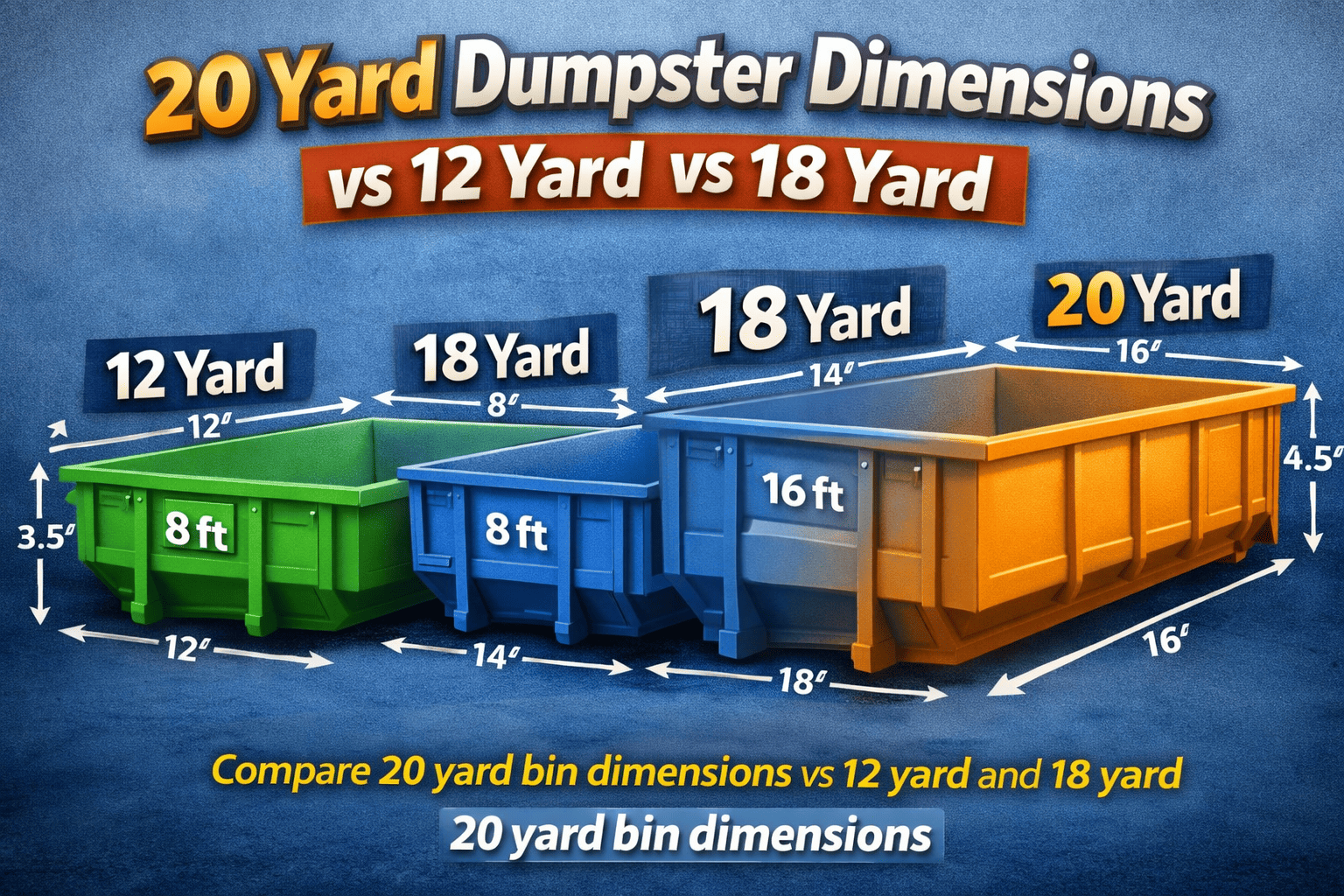
Typical 12 Yard Bin Dimensions
-
Length: ~12 feet
-
Width: ~8 feet
-
Height: ~3.5–4 feet
Capacity Overview
A 12 yard dumpster holds approximately:
-
3–4 pickup truck loads of waste
-
Around 1.5–2 tons of debris (depending on material type)
Best Projects for a 12 Yard Dumpster
-
Small bathroom renovations
-
Garage or shed cleanouts
-
Light roofing jobs
-
Yard debris and landscaping waste
Limitations
A 12 yard bin fills quickly with bulky materials like drywall or wood framing. It’s not ideal for whole-home projects or heavy construction debris.
18 Yard Dumpster Dimensions and Use Cases
Typical 18 Yard Bin Dimensions
-
Length: ~14–16 feet
-
Width: ~8 feet
-
Height: ~4–4.5 feet
Capacity Overview
An 18 yard dumpster holds approximately:
-
5–6 pickup truck loads
-
Around 2–3 tons of waste
Best Projects for an 18 Yard Dumpster
-
Kitchen renovations
-
Flooring removal from multiple rooms
-
Basement cleanouts
-
Medium construction or remodeling jobs
Limitations
While more versatile than a 12 yard bin, the 18 yard dumpster can still be restrictive for full home renovations or high-volume demolition waste.
20 Yard Dumpster Dimensions: The Most Popular Choice
Typical 20 Yard Bin Dimensions
-
Length: ~16–18 feet
-
Width: ~8 feet
-
Height: ~4.5–5 feet
If you’re looking for the most flexible option, understanding 20 yard bin dimensions is essential before booking.
Capacity Overview
A 20 yard dumpster holds approximately:
-
6–8 pickup truck loads
-
Up to 3–4 tons of material
Best Projects for a 20 Yard Dumpster
-
Full home renovations
-
Large drywall or flooring removal
-
Deck demolition
-
Roofing projects (up to 3,000 sq ft)
-
Construction and contractor jobs
Why the 20 Yard Dumpster Is So Popular
The 20 yard bin strikes the perfect balance between capacity and footprint. It offers significantly more volume than a 12 or 18 yard dumpster without requiring substantially more space.
Side-by-Side Dumpster Size Comparison
Space Requirements
| Dumpster Size | Length | Height | Space Needed |
|---|---|---|---|
| 12 Yard | ~12 ft | ~3.5 ft | Compact |
| 18 Yard | ~14–16 ft | ~4 ft | Moderate |
| 20 Yard | ~16–18 ft | ~4.5 ft | Moderate–Large |
Capacity Comparison
-
12 Yard: Small cleanouts, light debris
-
18 Yard: Medium renovations
-
20 Yard: Large projects, heavy debris
Weight Limits: A Critical Factor Many People Miss
While dimensions define volume, weight limits determine cost and compliance. Heavy materials such as concrete, roofing shingles, soil, and drywall can exceed limits quickly.
General guidelines:
-
12 yard dumpsters reach weight limits faster
-
18 yard bins handle moderate weight loads
-
20 yard dumpsters offer better weight flexibility
Always factor in material type—not just volume—when choosing a bin size.
Choosing the Right Dumpster for Your Project
Ask yourself:
-
How much debris will my project generate?
-
What type of material am I disposing of?
-
How much space do I have for bin placement?
-
Do I want to avoid multiple hauls?
If you’re between sizes, choosing the larger bin is usually more cost-effective than booking a second dumpster later.
Common Mistakes When Selecting Dumpster Sizes
-
Underestimating debris volume
-
Ignoring height restrictions
-
Choosing based on price alone
-
Not considering weight limits
-
Ordering a bin too small “to save money”
In most cases, upgrading from an 18 yard to a 20 yard dumpster prevents overflow and saves time.
Final Verdict: 12 vs 18 vs 20 Yard Dumpster
-
Choose 12 yard dumpsters for small, lightweight projects
-
Choose 18 yard dumpsters for medium renovations
-
Choose 20 yard dumpsters for maximum flexibility, large cleanouts, and construction work
If you want a reliable all-around solution, the 20 yard dumpster is the safest and most versatile option for most residential and commercial projects.