
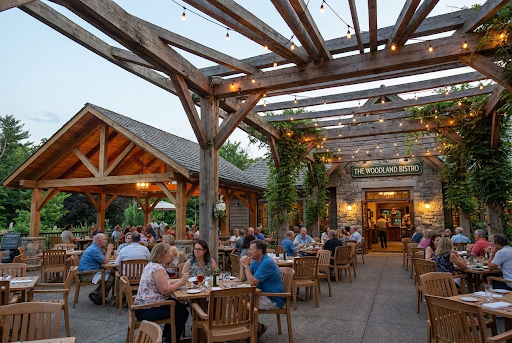
As businesses grow, they often need more space for customers, events, or employees.
Timber for business expansion offers a practical way to add usable square footage outdoors without undertaking a full building addition. Timber pergolas, pavilions, and canopies can convert underused exterior areas into comfortable, revenue-generating environments.
Because these structures are typically less invasive and faster to install than enclosed expansions, they can be a strategic first step for businesses testing demand or responding to seasonal trends.
Enhancing Customer Experience in Hospitality and Retail
In hospitality environments, outdoor space is a critical differentiator. A well-designed timber structure can:
- Provide shaded dining or lounge areas
- Create covered waiting zones
- Support bar or service stations
These improvements reduce perceived crowding indoors and give customers more choices about how they want to spend their time. In retail settings, canopies and covered walkways offer weather protection and extend merchandising space.
The natural character of timber contributes to a relaxed, inviting atmosphere that encourages longer stays and repeat visits.
Aligning with Brand Values and Story
Timber structures can serve as physical expressions of a brand’s values. Businesses focused on craftsmanship, sustainability, or wellness often find that heavy timber aligns naturally with their messaging. The material feels authentic and enduring, qualities many brands want to communicate.
Custom details—such as engraved logos, branded color accents, or integration with signage—allow the structures to become recognizable touchpoints. Customers begin to associate the business not just with its products, but with the spaces in which they encounter them.
Outdoor Workspaces for Employees
Expansion is not limited to customer-facing areas. For offices, campuses, and institutions, timber pavilions and shelters can provide outdoor workspaces and break areas. Access to fresh air and daylight has been linked to improved well-being and productivity, and many organizations are rethinking how they use their sites to support these needs.
Covered outdoor meeting areas and flexible seating zones enable informal collaboration and give employees more choice about where to work, especially in temperate seasons.
Flexibility for Events and Programming
Timber structures support a wide range of programming: live music, pop-up markets, workshops, private events, and more. When designed with clear spans and minimal fixed obstructions, they can be reconfigured quickly to suit different uses.
This flexibility is particularly valuable for businesses that host seasonal events or rent spaces for private functions. A single well-planned structure can serve multiple roles throughout the year, increasing its return on investment.
Practical Considerations: Weather, Utilities, and Zoning
For expansion to be truly useful, outdoor structures must be functional in the local climate. That means addressing:
- Sun orientation and shade levels
- Rain and snow protection where appropriate
- Wind exposure and shelter strategies
Utilities—power, lighting, and sometimes gas or water—should be integrated from the start. This supports outdoor kitchens, presentation equipment, and comfort systems like fans or heaters.
Local zoning and permitting requirements may influence size, placement, and design. Engaging with these constraints early avoids surprises and keeps projects on schedule.
Durability and Maintenance in High-Traffic Settings
Commercial structures face more wear than residential ones, simply due to higher traffic and constant use. Timber sizing, species choice, and protective finishes should reflect this reality. Robust joinery, impact-resistant details, and easy-to-clean surfaces help keep spaces appealing and safe over time.
Scheduled maintenance—cleaning, inspections, and refinishing where needed—can often be coordinated with other property upkeep tasks. Clear expectations about care ensure that the structures continue to support the business rather than becoming liabilities.
Financial Considerations and Return on Investment
Timber-based expansion is typically more cost-effective than enclosed construction on a per-square-foot basis, especially when the goal is to create covered, but not conditioned, space. The added capacity may translate directly into increased sales, event revenue, or rent.
Beyond direct income, improved aesthetics and comfort can boost customer satisfaction scores, online reviews, and overall brand perception. These indirect benefits can be significant over the life of the business.
Conclusion
Timber for business expansion gives owners a versatile toolkit for adding capacity, enhancing experience, and expressing brand identity in physical form. By using outdoor structures strategically, businesses can grow in a phased, flexible way that supports both current operations and future opportunities.