
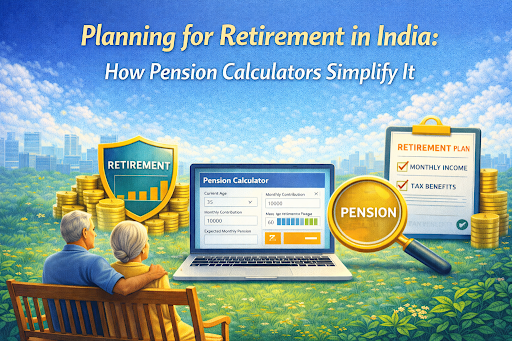
I’ve spent years talking to people who are either close to retirement or already there. The conversations are rarely dramatic. No spreadsheets spread across tables. No grand financial jargon. Just quiet questions asked over tea.
“Will my savings last?”
“Am I missing something?”
“Did I start too late?”
In India, retirement planning often begins with good intentions and ends with guesswork. Many retirees rely on a mix of EPF, PPF, a small pension, maybe rental income. On paper, it sounds fine. In real life, expenses behave differently once salaries stop.
This is where a pension calculator earns its place. Not as a magic fix. As a reality check.
The Gap Most People Don’t See Coming
I’ve seen this pattern repeatedly. Someone retires at 60 with a decent corpus and feels relieved. For the first couple of years, life seems manageable. Then medical costs rise. Family needs change. Inflation quietly eats into monthly comfort.
The problem isn’t a lack of savings. It’s a lack of clarity.
Many people calculate retirement needs once, years ago, and never revisit the numbers. They assume fixed deposits will cover expenses forever. Or that children will step in if needed. That assumption works… until it doesn’t.
A pension plan calculator brings the uncomfortable questions forward. How long will the money last? What happens if you live longer than expected? What if returns are lower for a few years?
None of this feels pleasant. It is necessary.
Why Calculators Work When Advice Doesn’t Stick
I’ve noticed something interesting. People often ignore verbal advice but trust the numbers they see themselves.
Tell someone they might run short of funds at 78, and they’ll nod politely. Show them a pension fund calculator result that runs dry at 76, and suddenly the conversation changes.
Calculators remove emotion from the equation. They don’t judge decisions. They simply show outcomes.
You enter your age. Your savings. Expected monthly expenses. Maybe inflation. The result is rarely perfect, but it’s honest enough to spark action.
And action matters more than precision.
It’s Not About Chasing High Returns
There’s a misconception that pension calculators push people toward aggressive investments. In my experience, the opposite happens.
Most retirees use these tools to slow things down. To check if their current setup is stable. To see how small adjustments make a difference.
Reducing monthly expenses by a few thousand rupees.
Delaying withdrawals slightly.
Allocating part of the corpus more carefully.
A pension plan calculator shows that stability often comes from small, sensible decisions stacked over time.
No drama. No risky bets.
Real-Life Example I’ve Seen Play Out
A retired school teacher I once spoke to had ₹45 lakhs saved. She assumed it would last comfortably. Her monthly expense estimate was optimistic, based on pre-retirement life.
We ran the numbers using a pension calculator. The results surprised her. Medical costs and inflation shortened the runway more than expected.
She didn’t panic. She adjusted.
She postponed a large gift she planned to give. Moved part of her savings into instruments with steadier income. Reviewed expenses she had never questioned before.
That single calculation didn’t change her life. It gave her control.
Why Indian Retirees Benefit More from these Tools
India doesn’t offer a universal pension system that covers everything. Most people piece together their retirement income from multiple sources.
EPF.
NPS.
Annuities.
Personal savings.
Family support.
A pension fund calculator helps bring all of this into one view. Not perfectly, but clearly enough.
It also accounts for something we don’t talk about much-longevity. People are living longer. Retirement isn’t a short phase anymore. It can last 25 to 30 years.
That’s not something intuition handles well. Numbers do.
When Should You Actually Use One?
Not just at retirement. That’s often too late.
I usually suggest three points:
- Five to ten years before retirement, to set direction
- At retirement, to test assumptions
- Every few years after, to stay aligned with reality
Life changes. So should your plan.
Using a pension calculator once and forgetting it defeats the purpose. Think of it as a mirror you glance into occasionally. You don’t stare all day. You don’t ignore it either.
What To Watch Out For
Not all calculators are equal. Some are overly optimistic. Some ignore inflation. Others assume unrealistic returns.
Use them as guides, not promises.
And don’t get lost adjusting numbers endlessly. If changing one input by a small amount gives wildly different results, that’s a signal to be conservative.
The goal isn’t perfection. It’s preparedness.
Simple takeaways that actually help
- Don’t rely on memory for retirement math. Write it down or plug it in.
- Revisit your numbers every few years, even after retiring.
- Treat calculators as conversation starters, not final answers.
- Focus on sustainability, not squeezing maximum returns.
- If a result makes you uncomfortable, that discomfort is useful.
A Quieter Way to Think About the Future
Retirement planning doesn’t need to feel like a final exam. It’s more like checking the weather before a long trip.
A pension plan calculator won’t tell you everything. It won’t predict every expense or market swing. What it does offer is perspective.
And perspective, especially in retirement, brings peace.
When people know roughly where they stand, they sleep better. They make calmer decisions. They stop worrying about the “what ifs” and start focusing on living.
That, in my experience, is what good planning is really about.