
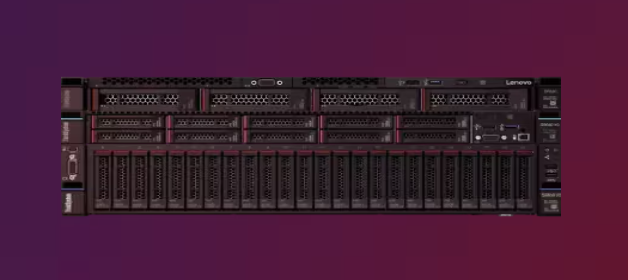
Data centers face a growing challenge today. Floor space costs money, and every square foot matters. High-density rack servers offer a solution that many businesses overlook. These powerful systems pack more computing power into less physical space. Your server room can handle increased workloads without expanding the footprint.
The technology has progressed a lot in the past few years. The differences between the waste of resources and the highest efficiency are made by clever deployment strategies.. You need practical approaches that deliver real results.
This guide reveals five proven methods to maximize your data center space using high-density rack servers. Each strategy builds on real-world applications and tested solutions.
1. Deploy Blade Server Architecture for Maximum Efficiency
Blade servers revolutionize space utilization in modern data centers. These modular systems fit multiple server racks into a single chassis, enabling faster scaling and freeing up rack space for critical network or storage equipment . Your rack space becomes far more productive instantly.
Each blade operates as an independent server with dedicated resources:
- Individual processing units work simultaneously.
- Shared power supplies reduce redundancy.
- Centralized management simplifies operations.
- Hot-swappable components minimize downtime.
- Integrated networking reduces cable clutter.
The chassis design eliminates duplicate components across servers. Power supplies and cooling fans serve multiple blades at once. This approach cuts both space requirements and energy consumption.
Calculating Your Blade Server Capacity
Start by assessing your current server count and rack utilization.
- Blade systems typically fit 8-16 servers in a space that held 2-4 traditional units. The math favors density without question.
- Your infrastructure team should measure available rack units carefully. Standard blade chassis occupy 5-10U of rack space. This configuration delivers computing power equivalent to multiple traditional racks.
2. Implement Vertical Scaling With Tall Rack Configurations
The default option for conventional data centers is the standard 42U racks. The use of taller racks enables extra capacity to be accessed without the need for floor space expansion.. Your facility gains computing power through vertical expansion.
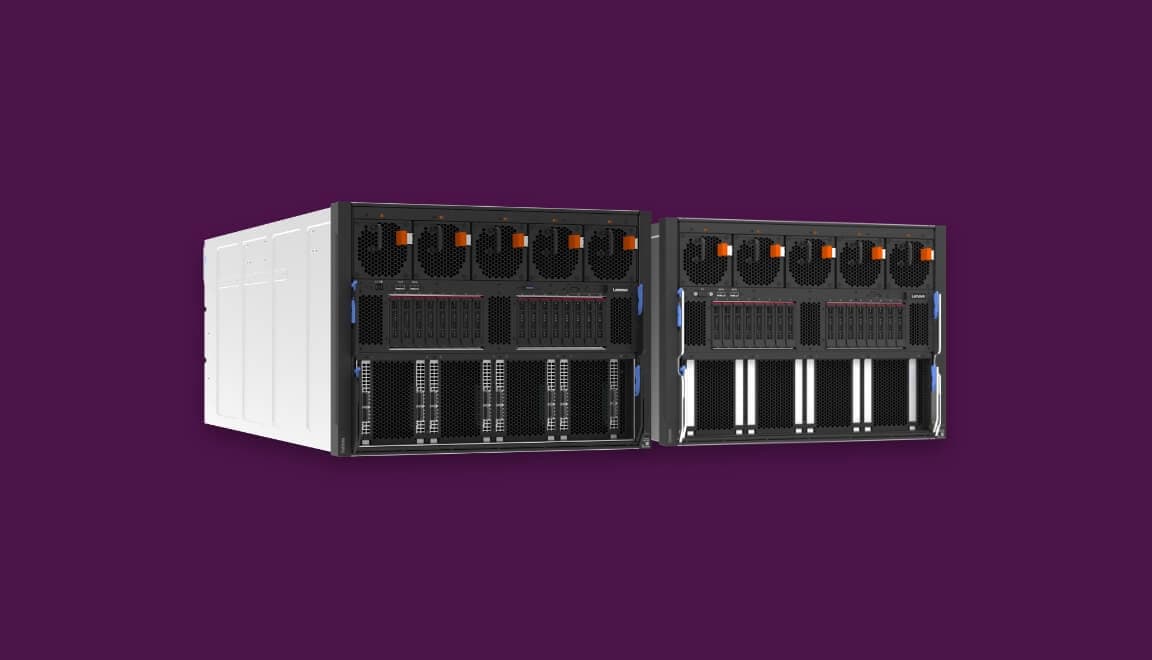
Modern infrastructure supports racks up to 52U in height. This increase adds 10 additional rack units per installation. The benefits multiply across your entire server room.
Consider these advantages of tall rack systems:
- 24% more usable space per rack footprint.
- Reduced aisle space requirements.
- Lower per-server deployment costs.
- Improved airflow management options.
- Better cable management possibilities.
Optimizing Your Vertical Space Strategy
Weight distribution matters significantly in tall rack deployments. Heavy equipment should sit near the bottom for stability. Lighter components and networking gear work well in upper positions.
Your team needs appropriate equipment for maintenance at height. Service platforms or proper ladders become essential tools. Safety protocols must address working above standard reach.
With more business options for rack servers, the market is continuously growing. The data center rack market is estimated to exceed $247.09 billion by the end of 2032
3. Embrace Liquid Cooling Systems for Increased Density
Air cooling reaches its limits at high server densities. Liquid cooling systems enable far greater equipment concentration. Your data center breaks through traditional thermal barriers.
The physics of liquid cooling surpasses air-based approaches dramatically. Water is 25 times more effective as a heat carrier than air. The water-aided cooling allows for a closer setting of the servers without overheating.
Understanding Liquid Cooling Technologies
Several liquid cooling methods serve different density needs. Direct-to-chip cooling targets processors and high-heat components specifically. Rear-door heat exchangers cool entire racks without facility modifications.
Implementation costs vary significantly across cooling technologies:
- Rear-door heat exchangers require minimal infrastructure changes.
- Direct-to-chip systems need specialized server components.
- Immersion cooling demands purpose-built tanks and systems.
- Hybrid approaches balance cost against density gains.
4. Leverage Virtualization to Consolidate Physical Hardware
Virtualization technology multiplies the value of each physical server. Multiple virtual machines run on a single hardware platform. Your space efficiency increases without adding equipment.
Traditional one-application-per-server approaches waste tremendous capacity. Modern processors sit idle 85-90% of the time ,typically. Virtualization captures this unused potential effectively.
Server consolidation through virtualization delivers measurable benefits:
- Reduce physical server count by 70-80%.
- Lower power consumption dramatically.
- Simplify backup and disaster recovery.
- Enable rapid deployment of new systems.
- Decrease cooling requirements substantially.
The technology creates logical separation between applications. Each virtual machine operates independently despite sharing hardware. Your infrastructure becomes more flexible and responsive.
5. Adopt Micro Servers for Specific Workload Optimization
Micro servers target specific applications with right-sized resources. These compact systems eliminate the overhead of full-scale servers. Your density increases for certain workload types dramatically.
Web serving and content delivery benefit most from micro servers. These tasks need many small servers rather than a few large ones. The architecture matches workload characteristics perfectly.
Each micro server includes:
- Low-power ARM or Atom processors.
- Minimal memory for specific tasks.
- Integrated networking capabilities.
- Extremely small physical footprint.
- Reduced power consumption per node.
Hundreds of micro servers fit in spaces holding dozens of traditional units. Your capacity scales horizontally with minimal space impact. The approach works exceptionally well for distributed applications.
Identifying Micro Server Opportunities
Application analysis reveals which workloads suit micro servers best. Stateless web applications transition easily to this architecture. Database servers typically require traditional hardware instead.
- Power efficiency reaches peak levels with micro server deployments.
- Each node consumes 5-15 watts compared to 300-500 watts for traditional servers.
- Your energy costs drop while performance meets requirements.
Conclusion
High-density rack servers deliver compelling benefits when deployed strategically. Your data center transforms from space-constrained to capacity-rich. The five approaches outlined here provide concrete starting points.
Begin by assessing your current utilization and identifying immediate opportunities. Blade servers might solve urgent capacity needs quickly. Virtualization offers software-based gains without hardware purchases. Long-term planning should incorporate multiple strategies together. Tall racks combined with liquid cooling push density boundaries further. Micro servers handle specific workloads while traditional systems run core applications.
The technology continues to advance rapidly each year. Start implementing these strategies today and watch your data center capacity multiply without expanding walls.